





Add Row
Add Element
Apartment Neighborhoods News
update
Apartment Neighborhoods News
update
Add Element
  • Home
  • Categories
    • Real Tenants
    • Amenity Insider
    • Event Hub
    • Neighborly Know-How
    • Lifestyle & Décor
    • Family Niche
    • Apartment Market
    • Apartment Neighborhoods Blog
SUBSCRIBE TO NEWSLETTER 
  • update
  • update
  • update
  • update
  • update
  • update
  • update
March 03.2025
2 Minutes Read

Discovering the Real Russian Oligarch’s Mansion Behind Anora’s Success

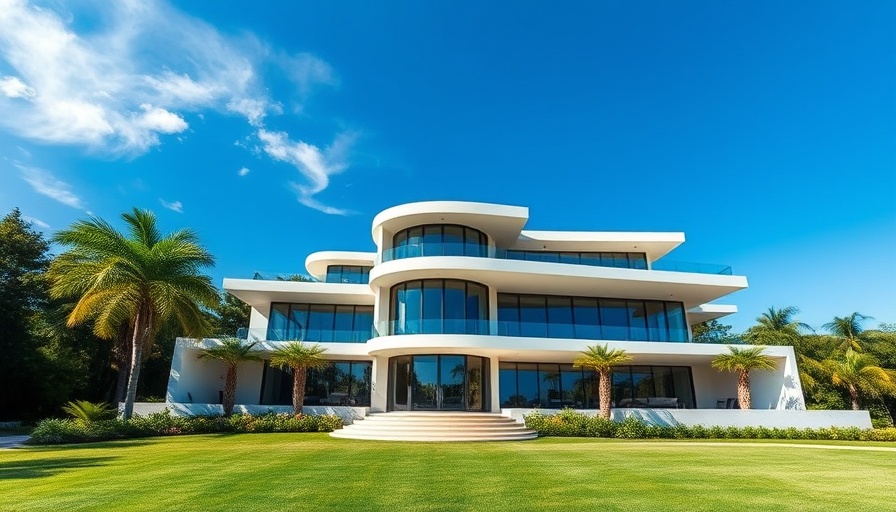
Modern Russian Oligarch Mansion with glass panels and trees.

Unveiling the Enigma of Anora’s Mansion: A Glimpse into Russian Oligarch Life

Located in Mill Basin, Brooklyn, the sprawling mansion featured in the award-winning film Anora serves as an extravagant testament to the wealth and eccentricity of Russian oligarchs. This 14,000-square-foot residence is not just a stunning architectural piece but also carries a vibrant narrative steeped in the lives of its former residents—members of the Anisimov family, connected deeply to Russian-American culture.

A Posh Palace: The Anatomy of Anora’s Dazzling Setting

The mansion’s façade is a striking blend of limestone and dark glass, evoking a sense of high-end Miami opulence amidst Brooklyn’s quirkier architectural landscape. As director Sean Baker sought locations that encapsulate the essence of Russian-American life, the mansion became a physical representation of the film’s themes. Its vast spaces include a shimmering pool, an impressive great room overlooking Jamaica Bay, and marble-laden interiors designed to dazzle and invite envy.

Why Anora’s Mansion Matters: Cultural Reflections and Artistic Depth

This residence is not merely a backdrop; it plays a pivotal role in defining characters' wealth and lifestyle. It embodies a rich tapestry of experiences woven through its occupiers' lives, like Anna Schafer (formerly Anna Anisimova), who describes her childhood spent in this extravagant home. As the daughter of the mansion’s owner, she shares that she grew up amidst luxury, where summer mornings were filled with Jet Ski rides, drawing a contrast to the hustle of Brooklyn life beyond the gates.

Behind the Scenes: The Home’s Transition to the Silver Screen

During the film’s production, the crew took full advantage of the mansion's elaborate features. Set designer Stephen Phelps ingeniously filled the spaces with rented luxury cars to emphasize Ivan’s wealth, while the film’s narrative provided glimpses into the lives of those inhabiting such opulence. Phelps recalled how filming transformed the mansion into a character of its own, resonating with the grandeur befitting a story of love and wealth.

From Real Life to Reel Life: How Anora Redefined Film Locations

Interestingly, Baker’s pursuit of an authentic setting led to the mansion. Producer Sammy Quan noted how a quick Google search for “the most expensive mansion in Brooklyn” brought forth this hidden gem. However, beyond its aesthetics, the filmmakers' experience living around the mansion introduced unexpected interactions, such as humorous mishaps with the kosher rules observed by the owners, creating a surreal yet entertaining production atmosphere.

Conclusion: A Heartfelt Legacy for Anora and its Mansion

The home’s transformation into the centerpiece of Anora marks a significant cultural moment. Anna Schafer expressed pride in her childhood home receiving such recognition, suggesting a profound connection between memory, family legacy, and creative representation. As audiences marvel at the visuals, the true beauty lies in the stories—the intersection of lives lived in luxury, a fairy-tale wonder, and cinematic artistry.

Lifestyle & Décor

38 Views

0 Comments

Write A Comment

*
*
Related Posts All Posts
02.06.2026

Explore the Luxurious Amenities of Brooklyn's Newest Condos at Hotel Bossert

Update A New Era for Brooklyn's Hotel Bossert The storied Hotel Bossert in Brooklyn Heights is undergoing a transformation that not only honors its historic roots but also redefines luxury living in the area. Originally opened in 1909 as one of the finest hotels in Brooklyn, the Bossert fell from grace in the decades following World War II, losing its splendor to dormitory-style accommodations for the Jehovah's Witnesses. Now, following a sale to the commercial real-estate firm SomeraRoad for $100 million, it is set to become a high-end condo building featuring some of the most desirable amenities seen in Brooklyn. Luxury Amenities That Stand Out SomeraRoad's plans for the Bossert reveal an ambitious vision that includes 60 to 70 luxurious apartments, primarily geared toward families seeking three- and four-bedroom units. Ian Ross, the founder of SomeraRoad, emphasizes that the conversion offers a phenomenal opportunity to meet the growing demand for upscale residences in a market largely constrained by landmark regulations. Notable amenities will include a 60-foot swimming pool, a dedicated kids' playroom, a Pilates studio, and exclusive private dining facilities, aiming to attract apartment renters looking for more than just living space. Community-Centric Approach In a nod to Brooklyn Heights' vibrant community, Ross has announced plans for an upscale restaurant within the condominium complex. This establishment, spanning 5,000 square feet and likely possessing outdoor space, is intended to fill a perceived gap in high-quality dining options in the neighborhood. By collaborating with some of the city’s most acclaimed restaurateurs, SomeraRoad aims to create a venue that serves not only the future residents of the Bossert but also the local community, enriching the neighborhood's social fabric. Broader Market Context and Demand The resurgence of family-oriented high-end real estate in Brooklyn Heights can be attributed to a growing demographic of urban families seeking larger living spaces with ample amenities. With much of Brooklyn Heights being a landmarked area, the availability of large, luxury condos is limited. As Ross points out, the Bossert's conversion represents a much-needed response to this pressing market demand, especially in a borough where high-end options have proliferated in recent years but often fall short of spacious, family-friendly layouts. The Legacy of the Bossert Once referred to as the 'Waldorf-Astoria of Brooklyn,' the Hotel Bossert boasts a rich history that reflects the evolution of Brooklyn itself. From its initial grandeur to its decline and tenure as a student dormitory, the building has weathered many changes over the years. The conversion to luxurious condos not only seeks to reclaim its status but also aims to preserve the unique character of this iconic site, which has already undergone considerable renovation under previous owners. Conclusion: Embracing Change in Real Estate The redevelopment of the Hotel Bossert signifies a noteworthy shift in how spaces are utilized within Brooklyn Heights. As it transitions to a community-focused residential environment rich in luxury, it presents an exciting opportunity for apartment renters who crave a lifestyle that blends upscale amenities with a sense of local belonging. The future of living in Brooklyn is bright, and the Bossert is poised to be at the heart of this transformation.

02.05.2026

Unlocking Isamu Noguchi's Vision: The Public Spaces New York Missed

Update Isamu Noguchi: A New York Visionary Whose Ideas Were Often Rejected Isamu Noguchi was not merely an artist; he was a creator whose imagination surpassed the limitations of his time. Born in Los Angeles and with roots tracing back to Japan, Noguchi’s work encompassed sculptures, architecture, and public spaces across the globe. He famously identified as a New Yorker, emphasizing how the city’s eclectic culture influenced his artistic expressions. Yet, ironically, many of his bold visions for public spaces in New York went unrecognized and unreconstructed during his lifetime. The Unbuilt Legacy: New York's Lost Public Spaces Despite his creative genius, many of Noguchi's proposed designs for public playgrounds and parks were rejected outright. His ambitious plan for Play Mountain in 1934—a surrealist playground concept complete with fountains and climbing ramps—was met with laughter by Parks Commissioner Robert Moses. Moses, a powerful figure in New York's urban planning, preferred conventional designs over the avant-garde spaces Noguchi proposed. This rejection of creativity continued to plague his career, with ambitions for various public works throughout the city either underappreciated or dismissed entirely. From Concept to Creation: A Look at the Now-Missing Designs One of the highlights of Noguchi's vision, the Contoured Playground, showcased a landscape of earth modulations tailored for children's play, much like a natural playground. Although it was constructively imagined in 1941, it never materialized. Today, replicas of Noguchi's designs serve to remind us of what could have been. The Noguchi Museum has worked diligently to present these unrealized concepts, allowing visitors to appreciate the artist’s innovative spirit, even as they mourn the lost opportunities. Emotional Reflections on Public Space Design For apartment renters in New York, the rejection of Noguchi's designs may resonate deeply, revealing a prioritization of traditional planning over innovative community spaces that could have enhanced urban living. Imagine a vibrant playground designed by an artist with deeply rooted cultural consciousness—one that reflects the diversity and vibrancy of community living. There’s an emotional disconnect when potential beauty and functionality of such spaces are neglected. These unrealized projects might leave apartment renters contemplating the disparity between urban potential and reality. Lessons from the Past: Revisiting Noguchi’s Vision Noguchi's story is a poignant reminder of the hurdles and nuances involved in urban planning. The rejection of his innovative designs serves as a cautionary tale for future generations of artists and planners. It beckons the question: how do we ensure that creativity is embraced rather than stifled? For today’s apartment renters and future architects, understanding this history is vital. We can advocate for community-driven design, perhaps inspired by Noguchi’s visionary ideas, showing that beauty should have a place in public realms. Your Opportunity to Engage with Art in Community Spaces If you find yourself inspired by Noguchi's vision and the conversation surrounding public space design, consider visiting The Noguchi Museum. Engaging with art can foster deeper connections in our urban landscapes. Explore how creative minds can influence the very fabric of communities and imagine the transformative power of well-designed public spaces that prioritize community engagement.

02.04.2026

Chrysler Building's Possible New Owner: What It Means for Apartment Renters

Update The Future of the Chrysler Building: What's Next for This Icon? New York City's skyline is marked by many landmarks, but few are as iconic as the Chrysler Building. Recently, anticipation has been brewing as Tishman Speyer stands on the cusp of potentially reacquiring this architectural gem. The conversations surrounding this deal raise important questions for New York's real estate, its landlords, and even apartment renters who may be impacted by changes in the area. Tishman Speyer: A Return to Legacy Tishman Speyer, a prominent real estate developer known for managing Rockefeller Center, is reportedly in talks to purchase the Chrysler Building from its current owners, Cooper Union. Having owned the building previously, Tishman knows the ins and outs of this unique property. Their expertise could bring not only a new vision for the building but also stabilize its condition, something that has troubled tenants and landlords alike in recent years. Challenges Ahead: Ground Rent and Repairs However, the road ahead is steep. The current ground rent of $32.5 million is projected to skyrocket to $41 million in just two years—a figure deemed impossible for the current rental market at the Chrysler. Experts assert that without substantial upgrades and repairs, which may cost upwards of $100 million, attracting tenants becomes even more daunting. Rental rates gathered from previous leases may not begin to cover these costs, leaving would-be investors contemplating their financial futures. The Rent Crisis: A Reflective Overview With the recent shifts in tenant demand and vacancies reaching 14%, the prospect of re-establishing the Chrysler Building as a desirable space raises concerns. Many industry insiders are questioning whether high ground rents are sustainable in an environment where demand for office space declines. In the last few years, we've seen the decline of once-thriving commercial spaces, and that trend continues to loom over potential renters. As apartment renters watch this drama unfold, they may wonder how changes in commercial real estate will ultimately trickle down into the rental market. Real Estate's Broader Implications for Renters The discussions about the Chrysler Building are not just finance and architecture; they affect the lives of everyday apartment renters. If Tishman Speyer successfully negotiates favorable terms, we may see revitalization plans that could ultimately complement residential offerings nearby. After all, a well-maintained Chrysler Building could draw in more businesses, clientele, and infrastructure investments, possibly enhancing the living experience for renters in nearby apartments. What Other Landlords Could Learn The scenario surrounding the Chrysler Building serves as a lesson for other landlords across New York City. They must balance rising costs with the changing economic landscape. With dozens eager to take up prime real estate, being mindful of accessible leasing terms and manageable ground rents might be critical. The potential acceptance of profit-sharing agreements could become a common theme, allowing landlords to recoup investments while securing stable tenants. Final Thoughts: Anticipation for Change In the midst of all this, apartment renters find themselves in an ever-evolving landscape. As the conversation about the Chrysler Building progresses, one can only hope that decisions made will benefit not only the commercial sector but enhance the living conditions for residents alike. With a revitalized iconic building potentially becoming a new hub for commerce and social interaction, the future is bright—if the negotiations can reap a favorable outcome. Keep an eye on developments, as they may soon reshape the entire fabric of New York's real estate narrative.

Terms of Service

Privacy Policy

Core Modal Title

Sorry, no results found

You Might Find These Articles Interesting

T
Please Check Your Email
We Will Be Following Up Shortly
*
*
*


