




Add Row
Add Element
Apartment Neighborhoods News
update
Apartment Neighborhoods News
update
Add Element
  • Home
  • Categories
    • Real Tenants
    • Amenity Insider
    • Event Hub
    • Neighborly Know-How
    • Lifestyle & Décor
    • Family Niche
    • Apartment Market
    • Apartment Neighborhoods Blog
SUBSCRIBE TO NEWSLETTER 
  • update
  • update
  • update
  • update
  • update
  • update
  • update
February 14.2025
3 Minutes Read

Finding Strength in My Post-Divorce Apartment: A Journey of Self-Reliance

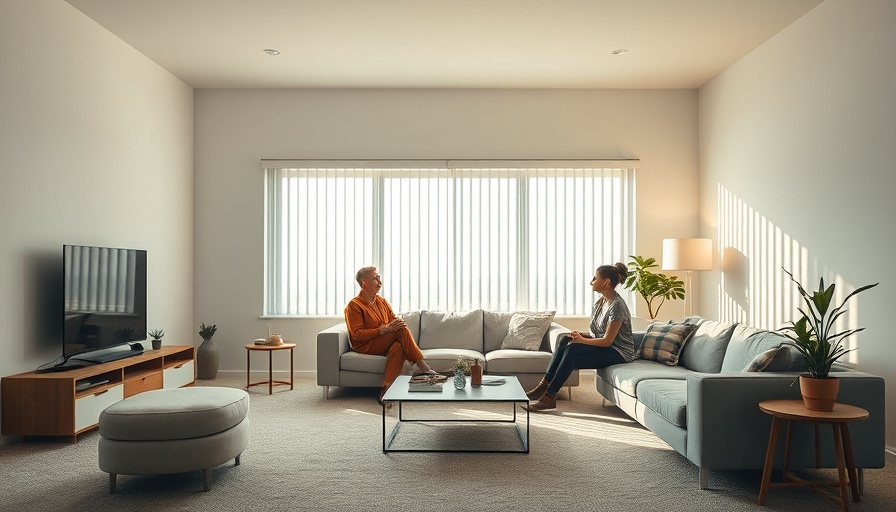
Minimalist post-divorce apartment living room with two people talking.

Rediscovering Independence: A Journey Through the Post-Divorce Apartment

My landlord’s skeptical inquiry — “Can you really live there by yourself?” — echoed in my mind as I settled into my first apartment alone after my divorce. This journey began on a cold January day in 2016, a day filled with uncertainty but also an unexpected thrill of newfound independence.

The aftermath of a divorce often leads one to wonder about the symbolism embodied in the first apartment post-separation. Is it a mere refuge from a previous life or a canvas for new beginnings? Oddly enough, it represents both: a somewhat haunting reminder and a beacon of potential freedom. This complex dichotomy of emotions resonates with many who have navigated their way through a similar experience.

Challenges and Triumphs of Apartment Hunting

Searching for a suitable apartment in NYC post-divorce is a daunting task, amplified by emotional turmoil and financial constraints. The rental market’s unforgiving nature means that many are navigating a web of anxiety wrapped in indecision. It’s not uncommon to feel lost while moving through the choices available — choices that are likely influenced by past experiences and the uncertain road ahead.

As highlighted by experts, the challenge can be compounded when one enters the rental market without adequate funds or a solid credit history. It’s imperative to remain grounded, organizing thoughts and thoughts in such a turbulent time. Besides, staying close to one’s ex, especially when kids are involved, can help ease transitions, fostering a sense of consistency in the children’s lives.

The Value of Emotional Support During Transitions

The emotional support from friends during this transitional period can make all the difference. As I attempted to establish a life in my new apartment, I relied heavily on my close-knit circle. The shared experience and understanding made couch-surfing or crowded living situations feel less isolating. It’s crucial to seek that kind of support when adjusting to life post-marriage.

Wendy Paris, a contributor to Psychology Today, articulated how the experience of shopping post-divorce can blend hope with overwhelming indecision. Purchasing essentials for the new home often comes with nostalgia attached to previous relationships. It is this blend of emotions that can make even mundane tasks feel monumental.

A Fresh Start and Rediscovery of Self

Interestingly, even as I faced challenges securing furniture and groceries, I was too preoccupied with documenting my progress and re-establishing my identity. The act of decorating — or rather, not decorating — my apartment became a metaphor for my journey. After years of cohabitation, I was reminded of the freedom of choice regarding my own environment.

Looking back at those moments, I see now how the first steps toward reinvention often involve the acceptance of starting from scratch — each choice expressive of self-exploration rather than mere replacement of what was lost.

Finding Joy in Everyday Life

Ultimately, loving my apartment came with the acknowledgment of not being able to afford it at that moment. Signing the lease was both exhilarating and terrifying, but it was the strength I found in overcoming the landlord’s doubts that became a defining moment. It demonstrated my resilience — I could create a home, even if it wasn’t perfect.

Every mundane action in my new space sparked a small joy, reminding me that my existence is layered with significance. The transition to post-divorce living encapsulates a broader human experience — seeking solace amid life’s chaos and learning to navigate through feelings of loneliness, yet also embracing opportunities for self-discovery.

The post-divorce apartment tells a story of both pain and beauty, careful balance and rebuilding, echoing the sentiments shared widely by individuals wrestling with similar life changes.

Lifestyle & Décor

37 Views

0 Comments

Write A Comment

*
*
Related Posts All Posts
02.07.2026

The Lighthouse: A Creator's Haven for Apartment Renters in Brooklyn

Update Transforming Spaces for the New Age of Content Creators The Lighthouse in Greenpoint is the latest evolution in the workspace revolution, designed specifically for the vibrant community of content creators. This innovative hub, previously the Kickstarter office, is reimagined to cater to influencers, podcasters, gamers, and others who thrive on creativity but require a professional environment to produce and share their work. With cutting-edge facilities like soundproof booths, camera rigs, and high-tech studios, The Lighthouse positions itself as the go-to destination for modern creators looking to elevate their craft. A Collaborative Community for Like-Minded Creators Unlike traditional coworking spaces that cater to a wide range of industries, The Lighthouse focuses solely on the needs of content creators. The environment is designed to foster collaboration and innovation, encouraging members to network and share ideas. "We’re not just offering a space; we’re creating a community," explains Neil Waller, co-founder of The Lighthouse. This approach mirrors the sentiment shared by experts, who emphasize the importance of community in the gig economy, where freelancers seek connections for support and growth. What Sets The Lighthouse Apart? One of the standout features of The Lighthouse is its emphasis on accessibility and functionality. Gone are the days of lugging around heavy equipment from home or setting up complex arrangements for filming. Instead, creators can dive right into their projects with everything they need at their fingertips. Nathan Warkentin, the designer behind this transition, ensured that each room was equipped with seamless tech support. The result is a space where creators can focus solely on their craft without distractions. A New Era for Creators and Brands The launch of The Lighthouse coincides with a significant trend: brands are increasingly investing in creators rather than conventional advertising methods. As outlined in recent reports, the creator economy is projected to grow exponentially, drawing interest from major players like Fox. With an estimated worth of $250 billion, this landscape is ripe for innovation, and The Lighthouse aims to nurture the next generation of content creators ready to take the spotlight. Connecting Apartment Renters to the Creator Economy For apartment renters, especially those in creative fields, understanding this shift is crucial. Living in proximity to such dynamic spaces not only enhances the potential for networking but also places them at the forefront of emerging trends. Being part of this ecosystem can provide valuable insights and opportunities, whether it’s through direct collaboration, events hosted at The Lighthouse, or simply the synergy of being engaged with fellow creatives. Conclusion: A Call to Explore New Creative Spaces The Lighthouse represents more than just a workspace; it’s a beacon for the creative community navigating the complexities of the digital age. For apartment renters who have a passion for content creation or simply want to engage with a thriving local scene, The Lighthouse offers a glimpse into the future of collaboration and creativity. Don’t miss out—consider exploring how you can integrate your creative interests into this evolving community.

02.06.2026

Explore the Luxurious Amenities of Brooklyn's Newest Condos at Hotel Bossert

Update A New Era for Brooklyn's Hotel Bossert The storied Hotel Bossert in Brooklyn Heights is undergoing a transformation that not only honors its historic roots but also redefines luxury living in the area. Originally opened in 1909 as one of the finest hotels in Brooklyn, the Bossert fell from grace in the decades following World War II, losing its splendor to dormitory-style accommodations for the Jehovah's Witnesses. Now, following a sale to the commercial real-estate firm SomeraRoad for $100 million, it is set to become a high-end condo building featuring some of the most desirable amenities seen in Brooklyn. Luxury Amenities That Stand Out SomeraRoad's plans for the Bossert reveal an ambitious vision that includes 60 to 70 luxurious apartments, primarily geared toward families seeking three- and four-bedroom units. Ian Ross, the founder of SomeraRoad, emphasizes that the conversion offers a phenomenal opportunity to meet the growing demand for upscale residences in a market largely constrained by landmark regulations. Notable amenities will include a 60-foot swimming pool, a dedicated kids' playroom, a Pilates studio, and exclusive private dining facilities, aiming to attract apartment renters looking for more than just living space. Community-Centric Approach In a nod to Brooklyn Heights' vibrant community, Ross has announced plans for an upscale restaurant within the condominium complex. This establishment, spanning 5,000 square feet and likely possessing outdoor space, is intended to fill a perceived gap in high-quality dining options in the neighborhood. By collaborating with some of the city’s most acclaimed restaurateurs, SomeraRoad aims to create a venue that serves not only the future residents of the Bossert but also the local community, enriching the neighborhood's social fabric. Broader Market Context and Demand The resurgence of family-oriented high-end real estate in Brooklyn Heights can be attributed to a growing demographic of urban families seeking larger living spaces with ample amenities. With much of Brooklyn Heights being a landmarked area, the availability of large, luxury condos is limited. As Ross points out, the Bossert's conversion represents a much-needed response to this pressing market demand, especially in a borough where high-end options have proliferated in recent years but often fall short of spacious, family-friendly layouts. The Legacy of the Bossert Once referred to as the 'Waldorf-Astoria of Brooklyn,' the Hotel Bossert boasts a rich history that reflects the evolution of Brooklyn itself. From its initial grandeur to its decline and tenure as a student dormitory, the building has weathered many changes over the years. The conversion to luxurious condos not only seeks to reclaim its status but also aims to preserve the unique character of this iconic site, which has already undergone considerable renovation under previous owners. Conclusion: Embracing Change in Real Estate The redevelopment of the Hotel Bossert signifies a noteworthy shift in how spaces are utilized within Brooklyn Heights. As it transitions to a community-focused residential environment rich in luxury, it presents an exciting opportunity for apartment renters who crave a lifestyle that blends upscale amenities with a sense of local belonging. The future of living in Brooklyn is bright, and the Bossert is poised to be at the heart of this transformation.

02.05.2026

Unlocking Isamu Noguchi's Vision: The Public Spaces New York Missed

Update Isamu Noguchi: A New York Visionary Whose Ideas Were Often Rejected Isamu Noguchi was not merely an artist; he was a creator whose imagination surpassed the limitations of his time. Born in Los Angeles and with roots tracing back to Japan, Noguchi’s work encompassed sculptures, architecture, and public spaces across the globe. He famously identified as a New Yorker, emphasizing how the city’s eclectic culture influenced his artistic expressions. Yet, ironically, many of his bold visions for public spaces in New York went unrecognized and unreconstructed during his lifetime. The Unbuilt Legacy: New York's Lost Public Spaces Despite his creative genius, many of Noguchi's proposed designs for public playgrounds and parks were rejected outright. His ambitious plan for Play Mountain in 1934—a surrealist playground concept complete with fountains and climbing ramps—was met with laughter by Parks Commissioner Robert Moses. Moses, a powerful figure in New York's urban planning, preferred conventional designs over the avant-garde spaces Noguchi proposed. This rejection of creativity continued to plague his career, with ambitions for various public works throughout the city either underappreciated or dismissed entirely. From Concept to Creation: A Look at the Now-Missing Designs One of the highlights of Noguchi's vision, the Contoured Playground, showcased a landscape of earth modulations tailored for children's play, much like a natural playground. Although it was constructively imagined in 1941, it never materialized. Today, replicas of Noguchi's designs serve to remind us of what could have been. The Noguchi Museum has worked diligently to present these unrealized concepts, allowing visitors to appreciate the artist’s innovative spirit, even as they mourn the lost opportunities. Emotional Reflections on Public Space Design For apartment renters in New York, the rejection of Noguchi's designs may resonate deeply, revealing a prioritization of traditional planning over innovative community spaces that could have enhanced urban living. Imagine a vibrant playground designed by an artist with deeply rooted cultural consciousness—one that reflects the diversity and vibrancy of community living. There’s an emotional disconnect when potential beauty and functionality of such spaces are neglected. These unrealized projects might leave apartment renters contemplating the disparity between urban potential and reality. Lessons from the Past: Revisiting Noguchi’s Vision Noguchi's story is a poignant reminder of the hurdles and nuances involved in urban planning. The rejection of his innovative designs serves as a cautionary tale for future generations of artists and planners. It beckons the question: how do we ensure that creativity is embraced rather than stifled? For today’s apartment renters and future architects, understanding this history is vital. We can advocate for community-driven design, perhaps inspired by Noguchi’s visionary ideas, showing that beauty should have a place in public realms. Your Opportunity to Engage with Art in Community Spaces If you find yourself inspired by Noguchi's vision and the conversation surrounding public space design, consider visiting The Noguchi Museum. Engaging with art can foster deeper connections in our urban landscapes. Explore how creative minds can influence the very fabric of communities and imagine the transformative power of well-designed public spaces that prioritize community engagement.

Terms of Service

Privacy Policy

Core Modal Title

Sorry, no results found

You Might Find These Articles Interesting

T
Please Check Your Email
We Will Be Following Up Shortly
*
*
*


